PN-IV-P2-2.1-TE-2023-2082 Contract No.: 134TE/2025 Duration: 24 months Finance source: State budget, contracting authority: Romanian National Authority for Scientific Research and Innovation, CNCS-UEFISCDI Budget: 473 684 RON (~ 94 737 EUR) Project start: 01/09/2025 Project end: 31/08/2027
According to World Health Organization (WHO) cancer is still one of the major causes of mortality with almost 10 million deaths worldwide. Among various forms of cancer, melanoma incidence has increased since the '70s, particularly in the fair-skin population. Although immunotherapy revealed itself as one of the most attractive therapeutic options compared with chemo- and radiotherapy, particularly using immune checkpoint inhibitors (ICIs), only a subgroup of patients displays a net clinically benefit and even from these, some show relapse, developing drug-resistant tumors. This underlies the complex interaction between cancer cells and the immune system, particularly considering that immune evasion is one the cancer hallmarks. One of the major contributors to this immune evasion is the glycoconjugate complex architecture found on the outer surface plasma membrane of cancer cells, the glycocalyx, which essentially involves a proteo-glyco-lipid composition. It has been shown for example, that increase sialylation allows cancer cells to avoid immune detection. Here we would like to address the glycocalyx dynamic features which contributes to the cancer-immune cell crosstalk, by using a dedicated multi-omics workflow encompassing mass-spectrometry-based proteomics, glycoproteomics and glycolipidomics analysis. This would result in the description of novel glycoconjugates with immunomodulatory properties, valuable for the translational tumour biology field.

Research Scientist
ACADEMIC CAREER 2019: Research Scientist (CS) III at the Institute of Biochemistry of the Romanian Academy (IBRA) 2016 – 2019: Research Scientist (CS) at the Institute of Biochemistry of the Romanian Academy (IBRA) 2014 – 2016: Research Assistant at IBRA EDUCATION AND TRAINING 2012 – 2017: Ph.D. in Biology at Institute of Biochemistry of the Romanian Academy (IBRA) with the thesis title: “Insights into functional interaction proteomics of endoplasmic reticulum associated degradation (ERAD) and antigen presentation in melanoma using mass spectrometry”, Coordinators: Dr. Andrei Jose Petrescu/Dr. Niculina Mitrea (University of Medi More...

Asistent
Bica Constantin Catalin is a researcher in the Institute of Biochemistry of the Romanian Academy. Bica is currently working in Enzymology in the Enzymology.
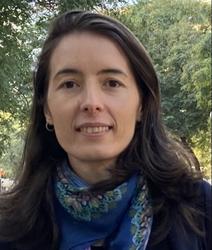
Scientific Researcher III
Gabriela Chiritoiu graduated from Faculty of Chemistry, University of Bucharest (2004-2008). She received her Ph.D. in Biology from the Institute of Biochemistry of the Romanian Academy in 2016, under the supervision of dr More...
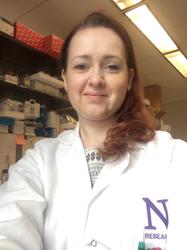
Research Scientist II
Livia Sima studied biochemistry at the University of Bucharest from where she obtained her bachelor degree in 2003. After graduation she started working at the Institute of Biochemistry where she was accepted to participat More...

Senior Reseacher II
Mari Chiritoiu graduated from Faculty of Chemistry, University of Bucharest (2004-2008) and received her Ph.D. in Biology from the Institute of Biochemistry of the Romanian Academy in 2014, under the supervision of dr. Ste More...
 Romanian Academy